Showing posts with label gluten free. Show all posts

Sunday, February 9, 2014

Healthy Blueberry Oat Pancakes (+ gluten free!)

There's something indulgent and wonderful about weekend breakfasts.  You're not rushed to get out the door, you can take your time and make something delicious.  Suddenly, breakfast isn't just a necessary quest for nourishment you scarf down while you get ready for work, it is once again a meal to be enjoyed.

I'll be the first to admit, North American breakfast doesn't lend itself easily to veganism.  Typical weekend breakfast menus are full of bacon and eggs.  Don't get me wrong, I love a tofu scramble as much as the next vegan, but it still feels like it's lacking something.  As luck would have it, pancakes are particularly easy to veganize.  Unfortunately, typical pancakes, made of white flour and covered in syrup, are nothing but empty calories, devoid of any and all nutritional value.  Sure, it's maple-flavoured empty calories, but let's face it, not the best start to your day.

One day, a few years ago, I accidentally invented something awesome.  I wanted pancakes for brunch, but went to the cupboard to discover I had no flour.  Drat.  I did, however, have an exceptionally large bag of oats.  I had encountered oat flour in baking before, and figured it was a reasonable substitute for wheat flour.  It was not reasonable.  It was amazing.  It was like healthy oatmeal and delicious blueberry pancakes had a lovechild, and then that lovechild rolled around in maple syrup.


Blueberry Oat Pancakes
Serves 2

1 cup oats (gluten-free if that's how you roll)*
1 Tbsp sugar
2 tsp baking powder
a dash of salt
a few dashes of cinnamon
1 Tbsp ground flax seed
3/4+ cup non-dairy milk
Splash o' vanilla
1/3 cup frozen blueberries

In blender, grind oats into flour.
In small bowl combine ground flax with about 1/4 cup of non-dairy milk, mix and set aside to thicken.
In medium size bowl, combine the dry ingredients.  Add remaining 1/2 cup of non-dairy milk, vanilla and flax mix.  Let batter sit for about 5 minutes. Add more liquid if need be (batter should be slightly thicker than pancake batter).
When your skillet is nice and hot (med-high), melt some vegan margarine or coconut oil.  Gently fold frozen blueberries into your pancake batter.  Ladle into pan.  Cook thoroughly before flipping (these pancakes will be more delicate than typical wheat flour pancakes, but should hold together fairly well if cooked enough before flipping).  Cook until nicely browned, but these will take longer than regular pancakes.
Top with real, Canadian maple syrup, berries or bananas.

* A note on Gluten-free oats: For those new to the GF game, oats are inherently gluten-free.  However, typical oats you buy in the store are almost always contaminated, as they are often processed on the same equipment as wheat. For this reason it is essential that you acquire legit gluten-free oats if you are sensitive to gluten.  Bob's Red Mill has GF Oats that you can find at most supermarkets, and if you are in the Ottawa area, Castor River Farm's oats are gluten-free, very reasonably priced and can be purchased at the Ottawa Farmer's Market (check their website to find out which weekends they attend which market).

Tuesday, November 5, 2013

Vegan Masoor Dal Soup

Lentils are a vegan's best friend.  They are tasty, versatile, filling, fast-cooking, and hella-cheap.  I've done a lot of things with lentils in my 6 years of veganism, and tonight I'm sharing one of my favourites.  No big surprise, it's a soup.  Dal, to be exact.  Now in India, "dal" is the word for any legumes (lentils, peas and beans) that have been hulled or split. Dal can also refer to a preparation of legumes, as a stew or soup.  Hulled lentils and split peas break down when you cook them, which is perfect for making thick, stick to your ribs soups.

Now, I have to confess something.  I hate peas.  Peas of all kinds.  Most of all, I hate yellow split peas. Pea soup?  Grossest food on the planet.  I know, not very vegan of me.  But I know that they are super good for you, so I've put them in this soup, and maybe, little by little, I can teach myself to like them.  I've kept my pea-to-lentil ratio low, but if you like peas, by all means, add more!

As discussed above, it is important to use hulled lentils in order to get the right texture.  Red lentils will do the trick and easy to find in most grocery stores, but any other hulled lentil will do.

Vegan Masoor Dal

1 onion, minced
3 cloves garlic, minced
1 carrot, shredded or finely chopped
3-4 kale leaves, finely chopped
1 tsp turmeric
1/2 tsp each cumin, garam masala, & cayenne pepper (to start)
1 1/2 cups red lentils
1/2 cup split yellow peas
5 cups vegetable broth

Mince up your veggies and saute in a pot with a bit of oil.  Save yourself some time and mince up your veggies in a food processor if you have one.  Add the rest of the ingredients and simmer until the lentils are cooked.  Taste the soup, and add more spices to taste. Serve with papadams or vegan naan bread if you can find it (most naan has dairy in it, but I've found vegan ones at the grocery store before).

Monday, January 7, 2013

Freedom Never Tasted So Good

Ok, ok.  I've been a bad blogger.  Again.  Sorry.

On a brighter note - I just made the best muffins ever!  AND they're gluten-free!

So what's the deal with gluten anyway?  Much like veganism, it's been getting a lot more buzz lately.  But, in case you're still in the dark, here's some information.  No skipping past the knowledge to the muffiny goodness!

The word "gluten" comes from the latin word for "glue".  No, I'm serious.  You see, gluten is a protein found in wheat (and related grains like barley and rye), and is a binding agent used in baking - it's what gives bread dough it's stretchy, elastic consistency. For a very long time this posed a big problem for those trying to bake gluten-free goodies.  Gluten Intolerance is a spectrum of disorders involving people who have adverse reactions to gluten, from sensitivites, to full-blown auto-immune response (aka celiac disease).  While celiac disease has been pretty well researched, non-celiac gluten sensitivity is still poorly understood, but it can trigger many similar symptoms, such as digestive upset, headaches, and fatigue.  What we do know is that more and more people are discovering that they feel better when they are not eating gluten.

It is estimated that 1 in 133 Canadians are affected by celiac disease [1].  Throw in the folks with gluten sensitivity, and well, it just makes good sense to learn how to cook without gluten!   Two of my close friends are gluten-intolerant, and I myself spent a year eating gluten-free as I suspected it as a culprit in my digestive woes.  When I first started cooking gluten-free (6 or more years ago now!) it was a challenge.  There was no Gluten-Free section at the grocery store, you couldn't find gluten-free goodies in your local bakery, there was no gluten-free pizza crust or hamburger buns available at restaurants.  What a difference 6 years makes!  Times have changed, and as awareness grows, so is the availability of products and resources.

Take, for instance, Bob's Red Mill All-Purpose Gluten Free Flour.  With one easy step you can transform any baking recipe into a gluten-free one.  Which is just what I did with the delightful muffins I'm about to teach you how to make.

Om nom nom... 


Gluten-Free ChocoNana Walnut Muffins!
Makes 12-15 muffins

1 1/2 cup all-purpose gluten-free flour
1 cup sugar
1/4 cup cocoa
1 tsp baking soda
1/2 tsp salt
1/2 tsp baking powder
1/2 tsp cinnamon

1 1/3 cup mashed, ripe bananas
1/3 cup vegetable oil
1/3 cup non-dairy milk
1 tsp vanilla

1 cup chopped walnuts

Whisk together dry ingredients (= lazy man's "sifting").  In a separate bowl whisk together wet ingredients.  Add wet to dry.  Fold in walnuts.  Pour into greased or lined muffin tins.  Bake at 350 for about 20-25 minutes, or until muffins are set and toothpick comes out clean.  Devour.


Monday, October 3, 2011

Brrr!

Well it's October. Don't ask me how it happened, I haven't a clue.  It's summer, everyone is warm and happy, you look away for one second and BAM! cold, damp, fall swoops in to put an end to sundress season.   Wasn't it only last weekend that I was sweating my butt off hiking through Gatineau Park on a beautiful 25 degree day?  Yep.  That was definitely only 8 days ago.  Regardless of what evil trickery brought it about, it's here now, and we're just going to have to deal with it. Autumn has arrived, and that means it's time to bust out the jackets and scarves, and it's also time to start making soup.

Lookout view over Gatineau park, Sept. 25 - the leaves just starting to turn

The really great thing about autumn (or as I like to call it "soup season") is that the fall harvest brings a bounty of produce to the local farmers markets.  So many soup possibilities await!  All of the produce in this warming, immune-system-boosting soup can be found at the farmers markets now.  You can make this in two ways: soup or stew.  I'll tell you how I made the soup, then what you can do differently to make it a stew instead!

Vegan Groundnut Soup 
Makes about 2 big meal-sized servings, or 4 small "on the side with a sandwich" sized servings

1 onion, diced
2-3 cloves garlic, minced
1 tsp fresh ground ginger
1 red pepper, chopped
4 plum tomatoes, diced
1-2 sweet potatoes, cubed (1-2 cm cubes)
Enough vegetable broth to just cover the vegetables
Cayenne pepper to taste
1/4 cup peanut butter (all-natural preferred)

In a large pot, saute onions with a bit of oil for a few minutes until they soften.  Add in garlic and ginger and saute for one minute.  Add the tomatoes and red peppers and saute until tomatoes start to break down.

Add remaining ingredients making sure to only put as much vegetable broth in as is needed to cook the sweet potatoes - you can add more liquid later, but it's more difficult to take it away.  Bring to a boil and simmer until sweet potatoes are cooked.

Using a hand blender, pulse soup to form a thick, creamy base while still leaving lots of chunks of vegetables. Alternatively, you can remove 1/3 to 1/2 of the soup and puree in a blender, then return it to the remaining soup.  Add more liquid if needed to reach desired soup density.


Stew form: Chop vegetables into larger chunks, do not puree at the end, and serve over rice.  Top with chopped peanuts and cilantro.  You may also add beans, tofu, or faux chicken to this stew if it pleases you.

Friday, September 30, 2011

Peachy Green

I love smoothies.  They're hard not to love - delicious, healthy, filling, and can be consumed on your commute to work (unless you cycle, that would be tough).  But lately I feel like I've been in a smoothie rut, making the same couple of smoothies every day.  I needed to branch out!  Shake it up a bit!  So yesterday, while at the grocery store, I spied the box of spinach and thought to myself - it's time to go GREEN.

No one will argue the benefits of leafy greens.  In them you'll find vitamins A, C, K, folate, fiber, calcium and iron.  Wait a sec.... just what is vitamin K?  It's not one of those vitamins you hear a lot about.  But like all vitamins, it's extremely important.  It plays a major role in healthy blood clotting and it is also vitally important to bone health.  Post-menopausal women who are experiencing bone loss can help prevent fractures by consuming adequate amounts of vitamin K.  Vitamin K also inhibits calcification (aka "hardening") of the arteries that is commonly associated with heart disease.  Vitamin K deficiencies can lead to heavy menstrual bleeding, gum bleeding, nose bleeds, easy bruising, anemia, bone fractures and osteoporosis. [1] The best source of vitamin K?  Leafy greens.

Don't worry, you don't need to gorge yourself on leafy greens for fear that your blood will stop clotting and your bones will break.  One cup of cooked spinach has over 1000% of your required daily intake of vitamin K.  Leafy greens such as spinach, kale, collard greens, swiss chard (you get the idea) all have whopping amounts of vitamin K.  So as long as you make some leafy greens a part of your regular diet, you'll be just fine.


Back to the smoothies.   I have made a green smoothie or two in the past.  Search google for "green smoothie" and you will turn up over 1.8 million hits.  After a little searching and a few of my own attempts I have a few tips for my fellow green smoothie noobs:

  1. Adding berries to a green smoothie will produce an unappealing brown smoothie.
  2. Use well-ripened bananas for creaminess and sweetness.
  3. Spinach has a mild flavour and is a good "starter green"
  4. Blend like hell - you don't want leafy chunks in your smoothie.

Peachy Green Smoothie

1 banana (frozen)
1-2 peaches
1 tbsp ground flax seed
a handful of baby spinach 
Enough water or soymilk to make it blendable

Throw it all in a blender, blend on a high setting for at least a few minutes (or until the leaf chunks disappear)

The verdict: really quite tasty!!  The spinach flavour is barely perceptible, and I have to admit, I enjoy the green colour.  This will definitely join the regular smoothie rotation.


Thursday, July 21, 2011

There's a new burger in town

Summer is the season of BBQs, and the king of the BBQ is the burger.  Veggie burgers are a staple among many vegetarians and vegans in BBQ season (and beyond) because they are easy - easy to find, easy to transport, easy to integrate into the BBQ scene because you won't find yourself explaining your food to skeptical omnivores because it looks "normal". 

Veggie burgers are not without their problems.  Most veggie burgers found in the freezer section of the grocery store are not vegan, and those that are vegan tend to be quite pricey and they aren't always tasty.  Some of us have tried our hand at homemade veggie burgers to varying success.  The greatest problem plaguing the homemade veggie burger is stability, aka they crumble, therefore making them not suitable BBQ fodder.  Not to mention that they often just taste very... uhh... homemade.

Vegan culinary goddess Dreena Burton has forever solved my homemade veggie burger woes with her Mushroom Pecan Burgers!  I made them exactly as she instructed and they were perfect!  Held together amazingly well (though I might grill them from frozen if I were taking them to a BBQ), and they were mega tasty.  I thought that they were a bit like a yummier version of a Lick's Nature Burger (which I do recommend if you're in a pinch).  My only complaint is that they are too big and too filling!!  Dreena recommends making 6 patties, which I did.  Next time I'll be making them into 7 or 8 patties, because I like to have room for side dishes or dessert.  Four hours after dinner and I still feel stuffed.

We topped our burgers with Daiya cheddar style shreds and No Meat Athlete's Vegan Bacon to create the most amazing VEGAN BACON CHEESE BURGER!!  Om nom nom!!

Wednesday, July 13, 2011

Vegan Birthday Brownie!

This year I am celebrating my birthday at bluesfest, and I just polished off this decadent vegan (and gluten free!) brownie courtesy of B. Goods bakery. Mmm! Happy birthday to me!

Tuesday, July 12, 2011

Tis the season

Farmer's Market season is well under way, and, here in Ontario, July and August offer the widest variety of fresh local produce for you to plunder.  Don't believe me?  Check out the availability of produce on Foodland Ontario's website. One of my favourite market buys is green beans.  Whether you eat them raw or steamed, green beans are tasty, low-cal morsels of goodness.  A cup of green beans offers 30% of your RDA of vitamin C, 15% of the RDA of vitamin A, and 4g of fiber, among many other vitamins and minerals.[1]

It may surprise you to know that green beans belong to the same species as black beans, navy beans, pinto beans and kidney beans (to name a few).  Phaseolus vulgaris was domesticated in Central America as early as 7000 B.C. [2] .  If you're thinking to yourself "Wait, green beans look nothing like kidney beans!" , that's because green beans are "immature" pods.  Just like pea pods, inside the green bean pod grows the round bean that would one day mature and harden into the "dry bean", which is the seed of the bean plant.  Unfortunately for the hard-working bean plant, and fortunately for us, we harvest green beans long before they mature, while they're still crisp and tender.


July and August is also prime BBQ and picnic season.  Potato salad, often in the form of a mayo-laden mush, is ubiquitous at such events.  But this is neither vegan nor is it healthy (or remotely tasty, in my opinion).   For your next summer potluck event, why not bring a big bowl of Green Bean & Potato Salad?  With local green beans and new baby potatoes available at the markets (or maybe even in your own garden, you lucky duck), it's a fresh and tasty departure from the old standby mayo-mush.

Thursday, November 4, 2010

Squash-travaganza!

Let's talk about squash.  I love squash.  All kinds of squash, even the sport!  Squash squash squash!
Sweet dumpling and acorn squash
Squashes belong to the family Cucurbitaceae which includes such wonderful fruits as melons, gourds and cucumbers.  There is a huge variety of squashes, including pumpkin, zucchini, butternut, acorn, hubbard, cushaw, buttercup, sweet dumpling, celebration, cream of the crop, sweet mama, turban, spaghetti, delicata, heart of gold.... and still more that I haven't heard of yet.

Celebration, Cream of the Crop, and Heart of Gold squash
Although there are so many varieties, they belong to only four species:  Cucurbita maxima (hubbard squashes), C. mixta (cushaw), C. moshata (butternut squash), and C. pepo (pumpkins, zucchini, acorn squash).
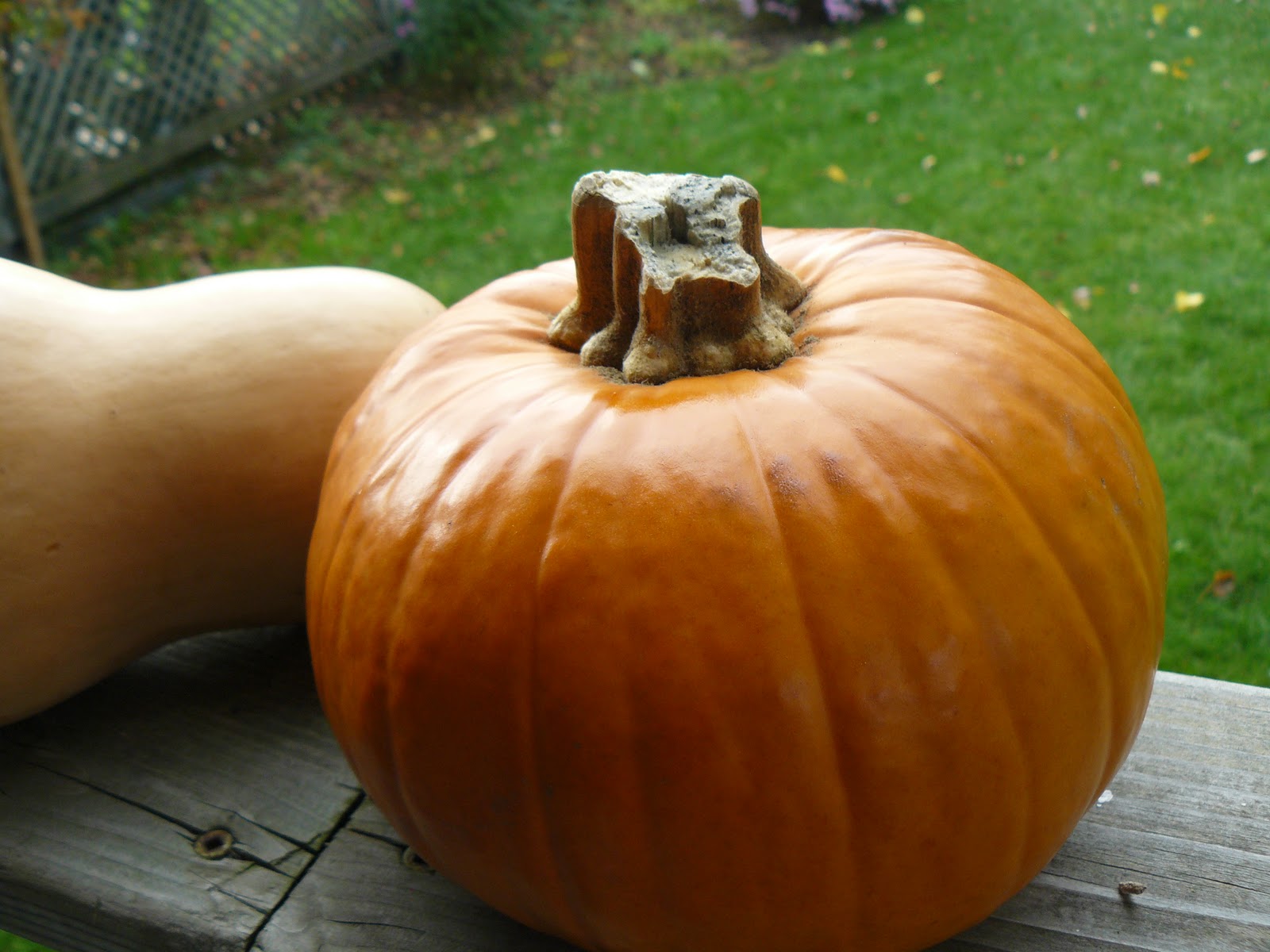
Butternut squash and pie pumpkin
Squash were domesticated in Mexico eight to ten thousand years ago [1].  They were an important food staple in central and north america.  Native Americans know squash as one of the "Three Sisters", along with corn and beans.  The three crops were planted together - the corn stalk was used to support the bean vine, and the large squash leaves trapped moisture in the ground for the growing plants and inhibits the growth of weeds.  Incidentally, combined together, squash, beans and corn make an excellent "Three Sisters soup".
Oven-roasted Sweet Dumpling squash with Sweet & Savory Quinoa
There are many ways that I like to use squash.  Have a sweet tooth?  Try these totally awesome chewy pumpkin oatmeal cookies.  They're my all time favourite cookie and I have yet to meet someone who doesn't love them.  Zucchini is awesome sliced, seasoned, and roasted in the oven or grilled on the barbecue (or campfire!).  Acorn squashes and their kin are perfect cut in half, roasted in the oven, with a little margarine and brown sugar sprinkled inside.  Butternut squash is my favourite for making fantastic (and filling) soups.
Butternut squash soup with maple syrup drizzle (and my cat Skrabble!)
Basic Butternut Squash Soup

1 onion, diced
1-2 tbsp margerine
1 Butternut squash, peeled & cubed
Water
vegetable bouillon cubes
Nutmeg, cinnamon & allspice, a few good dashes of each
Maple syrup for drizzle (optional, but awesome)

Saute onion in margarine until caramelized.  Toss in the squash and add enough water to just cover the squash. *Tip: measure your water as you're pouring it in so you know how many bouillon cubes to add!* Add your bouillon cubes and spices, and bring to a boil.  Let it simmer until the squash cubes are soft.  Puree the soup with a hand blender. If you're using a regular blender, make sure you vent the lid and cover it with a cloth so it doesn't create a pressure build-up and burst hot steam/soup in your face.  Nobody wants to be burned by squash.  At this point the soup could be pretty darn thick, so add some water, a little at a time.  I like to be conservative with my water during cooking because you can always add more but it's so much harder to take it away if you've added too much!  When you get the soup to the desired consistency, ladle some in a bowl and swirl a drizzle of real maple syrup on top, perhaps grate a little nutmeg on there.  Not only does it taste delish, it makes it look extra snazzy!

Thursday, May 6, 2010

For whom the Bhel tolls

Back in November I visited Burnaby, B.C. (that's British Columbia, not Before Christ for any Americans who may be reading this). While I was there I ate at a terrific Indian restaurant, the Bombay Bhel. I've had Indian food many times before, but this time I had something I'd never tried before. It's an appetizer called "bhel poori" (or bhel puri as it's sometimes written). Not technically a salad, but a "chaat". A chaat is a savoury snack usually consisting of crunchy bits, chutneys and cilantro. There are many variations on this theme, as I've come to learn. Bhel poori is essentially puffed rice, sev (crunchy noodle shaped bits made of chickpea flour), onion, tomato, cilantro, and tamarind chutney. A quick internet search reveals that no two recipes are exactly the same but those basic ingredients seem to be the standards that define this dish.


As I've said, bhel poori is a chaat, not a salad. But what is a salad, really? We cannot define it based on its ingredients, since a caesar salad, bean salad, and potato salad hardly share any of the same ingredients, and yet, we all know them to be salad. The word salad comes from the Latin word salata meaning "salty". Merriam-Webster defines a salad as:

1 : any of various usually cold dishes: as a : raw greens (as lettuce) often combined with other vegetables and toppings and served especially with dressing b : small pieces of food (as pasta, meat, fruit, or vegetables) usually mixed with a dressing (as mayonnaise) or set in gelatin

This definition, particularly part b, suits my concept of salad quite nicely. Let's think back to bhel poori: Usually cold? check. Small pieces of food? check. Mixed with a dressing? Hmmm... what constitutes a dressing? Merriam-Webster tells me that a dressing is "a sauce for adding to a dish". Well, I'd say that chutney counts as a sauce for adding to a dish. Thus, I deem that bhel poori meets the criteria qualifying it to be a salad, and thus, a valid entry in the Salad Challenge!

The recipe I more or less followed is found (ironically) at No Recipes. Funny that one should find recipes on a blog entitled No Recipes, but I'm not one to judge. It's actually an excellent blog with beautiful photography, I suggest you give it a browse.

The unfortunate thing about bhel poori is that proper ingredients are not always easy to find. The local superstore only carried mango chutney, and I couldn't find any sev. I did find a snack mix called "Jaffna mix" at the local bulk barn, and it did list the main ingredient as chick pea flour, so one can only assume that the little noodle-like sticks in this snack mix is indeed sev. I did come across the occasional bhel poori recipe that called for mango, so I thought the mango chutney would suffice, especially given the loose definition the dish has to begin with. With that, I give you my very own take on bhel poori.

Ash's Bhel Poori
Serves 1

1 small potato, cooked & coarsely mashed
1/2 roma tomato, chopped
2 tbsp red onion, chopped
1/2 cup cilantro, chopped
1/2 cup puffed rice
1/4 cup Jaffna mix
2 tbsp mango chutney (or enough to coat all the ingredients)

Mix all ingredients together and serve immediately. This recipe won't keep (the rice & sev will go all soggy). I really liked this recipe, it was quick and easy, but I would really like to try it again with tamarind chutney (this seems to be pretty important and I get the feeling that without it I'm sort of missing the mark a bit). Maybe I'll try to hunt some down in Ottawa sometime, cause I doubt I'll find it anywhere in Brockville.

Salad Challenge Countdown
Salads made: 18 Salads left: 34

Wednesday, May 5, 2010

Exploring Cilantrophobia

As I mentioned in my last post, there are people out there who have an aversion to cilantro. Maybe you know one of these poor unfortunate souls. Maybe you are one. Those who dislike it do so with fervor (there is even an "I Hate Cilantro" fanpage). The interesting thing is it appears that there is a genetic explanation for cilantro hating. In fact, they're not even experiencing the same taste - to them, this otherwise delightful herb, tastes like someone spilled soap in the food.

The New York Times ran a great article exploring cilantro aversions entitled: "Cilantro haters, it's not your fault." According to this article, the specific mechanism by which cilantrophobes taste this horrible soapiness is not yet known. There seems to be some unconfirmed speculation about the web that people of European descent are more likely to be cilantro haters. A quick search of recipes from the world would seem to confirm this fact, as most recipes containing cilantro seem to be from Asia, the Mediterranean & middle-east, and South & Central America.

Factoid: When Julia Child was asked if she would ever order a dish with cilantro she replied: "Never. I would pick it out if I saw it and throw it on the floor."

Fortunately for me I am not a cilantrophobe, and it appears, as promised, in tonight's salad recipe as well. This recipe is also a re-creation of a recipe I had whilst away in Bracebridge. During the course our lunches were provided. One day after a bizarre miscommunication with the caterers, lunch for the group consisted of pizza. For myself and a celiac in the group, a local health food store, the Muskoka Natural Food Market, was charged with the task of handling our special dietary needs. One of the things they brought us was a delightful rice & cashew salad. I have done my best to duplicate it here, and I think I've hit the nail on the head. I hope you like it as much as I do.


Sesame Cashew Rice Salad
Serves 2-3

2 cups cooked brown rice
1/2 cup cashews
1/4 cup dried currents
2 green onions, chopped
1/2 cup (loosely packed) chopped cilantro
1 tbsp sesame oil
1-2 tsp fresh lemon juice
salt & pepper


Salad Challenge Countdown
Salads made: 17 Salads left: 35

Tuesday, May 4, 2010

Love at First Bite

It is now the 18th week of the year, and yet I have only blogged about 15 salads. That means that this week I will attempt to make 3 posts containing 3 new and delicious salads. I could make excuses, but I won't. That's not what this 52 week challenge is all about.

Last week I went away on an OBBN training course. The OBBN is the Ontario Benthos Biomonitoring Network, and they are a network of researchers who collaborate, collecting and sharing data on the invertebrates that inhabit the bottom of freshwater bodies (streams, lakes, wetlands), for the purposes of assessing the health of freshwater systems throughout Ontario.

Ok, ok.... back to food. Whilst away for this course, inspiration was not in short supply. On the last day as we made our way home from Bracebridge, we stopped in Whitby for dinner. I had a hankering for sushi, but after parking and waiting to cross the street, we noticed a delightful looking Thai restaurant called i-Thai. I have to say, if you are ever in or near Whitby, you need to check out this place. We left that restaurant with full bellies, and smiles on our faces. Sometimes food really can bring immeasurable amounts of joy, and this place delivered. We started our meal with their mango salad, and it was love at first bite. I knew I had to go home and recreate it.

The key to this dish is using fresh herbs. This salad has both cilantro and mint, giving it a fresh bright taste. If you're one of those people who has an aversion to cilantro, I apologize, as it will appear in all three of this week's salads. It's not my fault really... if the grocery store would sell them in more reasonably sized bunches I wouldn't have this problem.

Mint belongs to a very prestigious
family- Lamiaceae. The mint family contains many delicious herbs including rosemary, oregano, lavender, sage, savory, thyme, oregano, marjoram, and catnip. There are many mints that are native to Ontario as well such as wild basil (Clinopodium vulgare), wild bergamot aka bee-balm (Monarda fistulosa) and a hat full of mountain mints (Pycnanthemum spp.). Mints have so many good things going for them. Mints aid in digestion, soothing the stomach and settling indigestion (ever wonder why Pepto-bismol and the like are always minty?). Mints are beneficial for asthmatics in two ways: first, rosmarinic acid blocks production of inflammatory compounds, and encourages the production of prostacyclins that keep the airways open. It's anti-inflammatory action also makes it a good choice for cold & flu season. And to top it off, they have a healthy dose of antimicrobial properties, suppressing the growth of bacteria (hence its presence in toothpaste).

Factoid: In Greek mythology, a nymph named Minthe was turned into a sweet smelling plant by Persephone

Enough rambling, and onto the salad!


Thai Mango Salad
Makes 2 servings

1 unripe mango
1 smallish carrot
1/4 red bell pepper
1 tbsp red onion
1 tbsp crushed peanuts
1 tbsp crushed cashews
5 or 6 fresh mint leaves
~2 tbsp fresh cilantro
juice of 1 lime
1-2 tsp agave nectar (or other sweetener)

Peel your mango and cut it into thin strips. Slice carrot, pepper, and onion as thinly as possible into thin matchsticks. Chop up herbs (Tip: an easy way to cut flat-leaf herbs like mint & basil - stack them on top of each other, roll them up along the long side, and slice thinly for even thin strips of herbs). In a small dish/cup, combine lime juice with agave nectar (or other sweetener). The amount of sweetener you'll need will depend on the tartness of the mango (less ripe = more tart), and your personal preference. Adjust as necessary. Toss all ingredients together. Allow the salad to rest for several minutes, allowing the flavours to get to know each other. Garnish with fresh mint leaves if you're feeling fancypants.

Salad Challenge Countdown
Salads made: 16 Salads left: 36

Saturday, April 17, 2010

Double Whammy

I'm blogging to you now from
Brockville, Ontario, my new home base for the next 6 months. In case you were wondering why I dropped the ball again and missed yet another week of my salad challenge, I will use the excuses of moving to a new city, and starting a new job (which means adjusting to a new sleep schedule). So this post will be a 2 for 1 deal of salad fabulousness.

Earlier this week I decided to try my hand at veganizing the Caesar salad. Perhaps one of the most popular salads around, and decidedly not vegan, this dressing traditionally contains egg, anchovies, and parmesan cheese. Needless to say, making this salad animal-product free is no easy task. I started by searching what else was out there on the internet. I came across several variations, but the one I decided to go with was found on Recipezaar. I chose this recipe since conveniently the recipes on this site are rated by those who have tried them, and this one was given a nearly perfect score.

Vegan Caesar I: Julius

Greenery of choice (romaine is traditional, but all I had was spinach)
croutons
Veggie Bacon - fried and crumbled

This salad was definitely tasty, and the dressing had some zing (and Caesar style garlic breath) but I'm going to have to classify this as a food fail because it really tasted nothing like a real Caesar salad. It didn't even look like Caesar dressing on account of the soy sauce. On the up side, it tasted really good on roasted potatoes!

Tonight's salad was anything but traditional. I'm not sure why, but I started thinking of how I could incorporate chocolate into a salad. I remembered that Susan over at FatFree Vegan Kitchen has made balsamic chocolate cookies before. She explained that balsamic vinegar actually enhances chocolate flavour, and so I figured that a chocolate balsamic vinaigrette would have to be delicious. When I was in the grocery store I spotted raspberry flavoured balsamic vinegar, and I was sold. I'm sure that you could make this recipe with regular balsamic vinegar, but I highly recommend this raspberry flavoured vinegar if you can find it.

Strawberry Salad with Chocolate Vinaigrette
Serves 1

4 or 5 strawberries, sliced
2 tbsp sliced almonds
greenery (I recommend baby spinach)

Dressing
1 tsp cocoa
1 tsp raspberry balsamic vinegar
1 tsp olive oil
1 tsp honey/agave nectar

This salad was seriously decadent. Seriously. Go out and make it.

Salad Challenge Countdown
Salads made: 15 Salads left: 37

Wednesday, March 31, 2010

Turmeric and Coriander and Cumin, Oh My!

Last night I attempted to introduce my cat, Skrabble, to my friend Brett's cat, Lily, in a hope that they would become the best of friends and have an outrageously adorable play date. This didn't occur. They generally just growled at each other and avoided each other for the majority of the evening, punctuated with the occasional screaming encounter.

You may be asking yourself, what does this have to do with food? Be patient, all will be revealed to you at the proper time. Lucky for you, that time is now. While over at Brett's place for kitty party (aka kitty growl-fest) I made a curry and onion bahjis for us for dinner. I decided to use this as inspiration for this week's Salad Challenge. The onion bhajis got me thinking about these battered fried onion bits that they put on the veggie burgers over at Darcy McGee's, a chain of pubs in the Ottawa area. Not only are these the best veggie burgers I've ever had, but atop their already fantastic burger, they put a grilled portobello cap and onions that have been battered in a curry-spiced batter, then deep fried. SO GOOD. Seriously, if you're in Ottawa you HAVE to go to one of these pubs and get their veggie burger. They also have some very good beer on tap - I recommend Erdinger.

Ok, I'm getting off topic again. The point is, I was thinking to myself that these crispy onions would make a super tasty salad topping. And so the idea for Bahji salad was born! These crispy fried onions would be an excellent topping for salads of all kinds, veggie burgers, sandwiches, portobello or tofu steaks. They're basically just delicious.

Crispy Bahji Bits

1 onion, cut in half, then thinly sliced
1 tbsp water
2 tsp cornstarch
3 tbsp chickpea flour
1/2 tsp each turmeric, coriander, cumin and chili powder
cayenne pepper to taste
olive oil

Mix cornstarch and water together. Add onions and toss to coat. In a tupperware container mix chickpea flour and spices. Add the onions to the container, put the lid on, and shake to coat.

Heat about a half centimeter of oil in a pan or pot over medium heat (I like pots cause they contain the oil splatter better). Put in only as many onions as the pot/pan will hold in a single layer. Fry until onions are crispy, turning once so that both sides are browned. Remove with slotted spoon and place on paper towel to absorb excess oil.

Bahji's are often served with Cucumber Raita for dipping. Raita is usually made with yogurt, but I replaced yogurt with soft silken tofu, and it turned out pretty well, but I think it still needs improvement. I used the raita I made as a salad dressing, and constructed my salad with baby spinach, grated carrot, sliced cucumber, raita, and of course, topped it all with a generous helping of bahji bits!
I rounded out dinner tonight with this Rice & Lentil Pilaf which was SO delicious (I used kale in place of dandelion greens), and Sweet Potato Falafel from my favourite vegan food blog, FatFree Vegan Kitchen. Also, totally delish. All in all, this was a kickass meal, even if I do say so myself!
Salad Challenge Countdown
Salads made: 13 Salads left: 39

Sunday, March 28, 2010

Eat Your Sunshine!

It's been a dreary, cold, blustery week here in Eastern Ontario, which is particularly disappointing after we had an unseasonably warm spell a few weeks ago. So this kind of weather usually makes me want to make soup (which I did), but for this second of this week's two salad challenges, I decided to bring summer into the kitchen by making my friend Laura's Sunshine Salad. Made with spring greens and fresh fruit, this recipe is sure to fool your tummy into thinking that the sun really has returned. This week strawberries and blackberries were on sale, so those are the berries I've opted for. The last time Laura made this for me she used strawberries, blueberries and grapes. Any berries will do. She topped it with raspberry vinaigrette. We always have frozen raspberries in the freezer (stored from the previous berry season) so I made my own dressing, but one from the store will work just as well.


Sunshine Salad
Spring greens or baby spinach
Berries of choice
Oranges, supremed
Red onion, thinly sliced
Sunflower Seeds

Fresh Raspberry Vinaigrette
Makes about 1/4 cup

1/4 cup raspberries (fresh or frozen)
1 tbsp olive oil
1/2 tsp raspberry or red wine vinegar
2 tsp honey (or to taste)
1 tsp orange juice

Mash raspberries with a fork. Add the oil and blend until smooth. Add remaining ingredients, adding more orange juice if you want a thinner dressing.

Salad Challenge Countdown
Salads made: 12 Salads left: 40


Tuesday, March 23, 2010

Dropped the Salad Ball Again

Why did I think I could do this 52 week challenge again? It's amazing how quickly a week can fly by without you noticing. Particularly if that week is filled with a lot of driving and apartment hunting. Lucky for my blog, I found an apartment. Next up, however, I must buy a car. How on earth will I manage car shopping, a Sens game, AND 2 salad blogs in one week? Yes, 2 salad blogs, since I must make up for last week's fail. After all, if I make 52 salads in a year, it all evens out in the end, right? That's the theory I'm going with anyway.

The first of this week's salads features quinoa (pronounced "keen-wah"). This illustrious little seed hails from the Andes in South America. It is in fact a seed, though it is used as you would a grain. It was considered a sacred food by the Incas, which is actually why it is little known today. Despite its supreme nutritional content, the Spanish explorers shunned quinoa because of its association with Incan religious ceremonies (read: non-Christian), and instead brought back the potato as their prize from the new world. Far be it from me to say anything negative about potatoes, but they can't hold a candle to quinoa as far as nutrition goes, and the Spaniards clearly made the wrong choice.

Quinoa is unique in that is one of a noble few plant-based foods that are a "complete" protein source. Complete, for anyone who is unsure, means that it contains all the amino acids that humans need to obtain from diet. This is often cited as the reason why animal products are a superior protein source. It is also why soy, which is also a complete protein, has become so dominant in the world of veg cooking. A cup of cooked quinoa contains 8g protein, 5 g fiber, and 15% of your recommended daily intake of iron.

So what does it taste like and how do you use it? Well, let me put it this way - if rice and couscous had a lovechild, I think it would turn out to be something like quinoa. Use it as you would rice. In fact, you'd be better off eliminating rice altogether and eating only quinoa. It has twice the protein content of brown rice (for the same number of calories), and cooks in 1/4 of the time. In this fresh and healthy salad, I've used quinoa as I might use couscous.


Quinoa and Black Bean Salad
Makes about 5 cups

2 cups cooked quinoa
1 cup cooked black beans
3 green onions, sliced
3/4 cup red pepper, chopped
3/4 cup cucumber, sliced & quartered
1 plum tomato, slimy middle stuff removed, chopped
2 tbsp lemon juice
1/2 tsp cumin
a few dashes of cayenne, to taste (optional)

Mix all the ingredients together. Refrigerate a little while, serve cold.

One of the things I have come to dread as a vegan is potlucks. Usually full of things I can't eat. I of course bring something that I can eat, but it is important to bring something that everyone likes, and offers a complete meal in one so I don't feel like I'm sacrificing my nutrition. This would be the perfect pot-luck dish that would feel quite at home at a barbecue as well.


Salad Challenge Countdown
Salads made: 11 Salads left: 41

Sunday, March 14, 2010

Blue Days Salad

I'm sure it's not surprising that this week's Salad Challenge recipe is based on my last entry on the Blue Days Diet. As a review the blue day diet includes: tryptophan (to boost serotonin), spiciness (to release endorphins), B vitamins (increase energy & elevate mood), carbohydrates (increase tryptophan uptake), and chocolate (cause it's awesome).

Ok, so this salad doesn't have chocolate. I couldn't come up with a way to do that, so i'll just have to make some hot cocoa later. Since I was eating this salad with a stir-fry that I served over quinoa, I figured that satisfied the carb requirement, and really, when are we ever lacking in opportunities to incorporate more carbs in our diet? So lets focus on the other three, tryptophan, B vitamins, and heat.

As I already mentioned, I was making a stir fry for dinner, so I decided to go with an asian influence in this salad. This salad features crimini mushrooms, which have nearly all of the different B vitamins as well as being an excellent source of tryptophan; cucumber, miso, sesame seeds and the baby greens are all sources of tryptophan as well. The dressing contains a good dose of cayenne pepper which will warm your tongue and get those endorphins flowing.


Crimini Mushroom Salad with Spicy Miso Dressing
Makes 1 salad

Dark leafy greens
4 or 5 crimini mushrooms, sliced
soy sauce
cucumber, sliced
sesame seeds

Dressing:
1 tsp miso paste
1 tsp oil (use sesame oil if you have it)
1 tsp rice vinegar
1/2 tsp fresh grated ginger
1/4 tsp cayenne pepper (or to taste)
1/2 tsp water

Saute mushrooms with a bit of soy sauce until well cooked. Set aside.
Whisk together dressing recipes. If you're not partial to spicy food start with a little and add more until it suits your tastes. You may want to add more or less water depending on how thick you want the dressing to be.
Drizzle dressing on top of greenery, cucumbers, and mushrooms, and top with sesame seeds.

Salad Challenge Countdown
Salads made: 10 Salads left: 42

Saturday, March 6, 2010

You can't have-a-da Mango!

Actually, you can, and should have-a-da Mango. Just as long as you don't steal mine! I absolutely love mangoes, but I don't buy them as often as I should. I was in the grocery store the other day picking up some bananas when I spied a basket of mangoes, and inspiration hit. Mango salad. Mmmm.... what a delicious idea. I grabbed the least cement-like mango, not having any idea what kind of dressing I would make to compliment the fresh fruity flavour.
Factoid: Mangoes are often used as a symbol of fertility in Indian culture, and it's no wonder - mango trees can live for over 300 years and still bear fruit [1]. They're also a symbol of love, so next valentines day, ditch the chocolates and buy your sweetie a basket of mangoes for a sensual and healthy treat.

One of my pre-vegan favourites was the Mango Lassi. For those of you who are not familiar, it is essentially a mango-yogurt smoothie found in Indian restaurants, and not surprisingly, India, which is the mangoes home and native land. It's tangy, gently sweet, creamy and luscious. So I set out to create a gently sweet, tangy, creamy dressing. I've also brought in a little extra south Asian inspiration by incorporating coconut and curry. I had some coconut whip in the fridge and just used a spoonful of that, but feel free to use coconut milk, or add a drop of coconut extract to soy milk.

Mango Salad with Creamy Coconut Curry Dressing
Makes 2 salads

1 Mango, peeled and sliced
1/3 red bell pepper, slivered
1 green onion, sliced
Salad greens

Dressing:
2 tbsp soft silken tofu
1/2 tsp coconut milk
1/4 tsp curry powder
1/2 tsp sugar
1 tsp lemon juice
soy milk

Whisk together all of the ingredients until the tofu is blended smooth, adding soy milk a little at a time to reach desired consistency.

If I hadn't added the green onion and pepper to this salad I might have confused it with desert, it was so good. It has a bright, clean, fresh taste, and the perfect accompaniment to the warm and spicy chickpea curry I had for dinner.

Salad Challenge Countdown
Salads made: 9 Salads left: 43

Friday, February 19, 2010

"Nature alone is antique, and the oldest art a mushroom." Thomas Carlyle

You may not believe it, but we really wouldn't survive without fungi. Often unseen, fungi are all around us and exert a powerful influence on the world. They are the major driving force of the nutrient cycle, they possess the necessary enzymes to break down tough plant material, returning the nutrients to the soil. There's hardly a natural molecule in the world for which there isn't a fungus that can break it down. Mighty trees are no match for these potent decomposers. Many plants form important symbioses with fungi, known as mycorrhizae, without which they could not get all the nutrients they need to survive.
Mushroom overlooking UWO campus, London

We are no exception. Yeasts are fungi too, and they make up an important part of our intestinal flora. You know all those Activia commercials with the happy bellies? They're happy because they're getting good yeasts that help them digest food. Yeasts are used to ferment soy to create soy sauce, miso, and tempeh. Yeast is used to ferment beer and wine. It is added to bread to make it rise. It is grown on a nutrient medium to produce nutritional yeast, an important food additive for vegans with no other means of obtaining vitamin B12.

Factoid: Fungi produce awesome antibiotics, including penicillin, which is often celebrated as one of the greatest discoveries of all time. Millions of people owe their lives to the everyday genius of a simple fungus.

Many fungi produce fruiting bodies, commonly known as mushrooms. These fruiting bodies are like the tip of the iceberg. The mushroom is used only for reproduction, the main "body" of the fungus stays in the soil, and the mushroom is akin to a flower bearing pollen. There are major biological differences in the life cycle, and the life cycles of fungi are very complex, but this analogy will do for the purposes of a food blog. Mushrooms are quite beautiful and fascinating structures. When I photograph mushrooms I often feel that I am stealing a glimpse at a magical world that is hidden away from us. Some mushrooms are so tiny, and yet to some organisms, they would seem like towering trees. Mushrooms always serve as a reminder to me that there are millions of organisms in a teaspoon of soil, a thought I find very humbling.

Sunlit Mushrooms, Ojibway Park, Windsor

It may or may not surprise you to know that only 1% of the mushrooms we know of are edible. Most of the rest are actually poisonous. According to my mycology textbook, The Fifth Kingdom, all mushrooms contain carcinogens, even the ones we eat all the time. Lucky for us these are easily destroyed by cooking them. The author warns to always thoroughly cook all mushrooms before consumption, even though they are routinely served raw. Sorry raw foodists, but it turns out there is at least one thing out there that isn't better for you raw.

Not surprisingly, mushrooms are quite nutritious. Because they are soil organisms, they are good sources of many trace minerals. They are an excellent source of selenium, an element necessary for DNA repair, thus making mushrooms a good member of your cancer prevention roster. Mushrooms are also good sources of copper, manganese, zinc, potassium, and iron [1]. And they're a good source of B vitamins to boot.

Agaricus bisporus is the species to which button, crimini and portobello mushrooms belong. Portobellos are my personal favourite because of their large cap and rich savory flavour. They easily stand in for beef in many situations because of their flavour and texture. They also pair well with the same bold seasonings usually used with beef, such as Montreal steak spice. And it just so happens that these are the focus of this weeks salad challenge.

Entrée salads became popular a little while ago when the western world became obese and realized that it needed to eat healthier. So what did they do? They created the steak salad, often smothered in blue cheese dressing. Somehow people convince themselves that since it's served atop lettuce this is a health food. But you and I know otherwise. The thing that steak salads do have going for them is that they are bold and hearty, and those are good things. I've taken that inspiration and created a healthy and vegan alternative to this entrée salad favourite.


Week 7: Montreal Spiced Portobello Steak Salad
Serves 1 for a main, 2 for a side

1 large portobello mushroom
1 roma tomato
Robust greenery such as romaine and radicchio
cucumber, radish and green or red onion slices

Dressing
2 tsp vegan worcestershire sauce
(or roughly: 1 1/2 tsp soy sauce, 1/2 tsp cider vinegar, pinch brown sugar, dash garlic & onion powder)
1 tsp montreal steak spice
1 tsp dijon mustard
1 tsp olive oil

Remove mushroom stem. Heat up a lightly oiled pan or grill to medium-high. Fry or grill mushroom cap, about 10-15 minutes per side with a splash of balsamic vinegar or worcestershire sauce. Slice tomato into 4 thick slices, add to pan/grill during last 5 minutes. Slice portobello into thin strips. Assemble salad portobello and tomato slices arranged on top.
Whisk together dressing ingredients and drizzle over salad. Top with some freshly ground pepper. Enjoy with a glass of red wine and a clear conscience.

Salad Challenge Countdown
Salads made: 7 Salads left: 45


Monday, February 15, 2010

More Thai Peanutty Goodness


My spicy Thai peanut dressing from last night put me in mind of spicy peanut dipping sauce, and my favourite thing to dip in that sauce is Thai fresh rolls (aka summer rolls). They are crunchy, fresh (as the name
suggests), snazzy looking and super easy. If you want to wow a date or dinner party, whip up some of these babies. They can be made up to a day ahead if you store them covered with a damp cloth (don't use terrycloth, the little loops and fluffs will stick to the wrappers), but they're such a snap to make, I would just get all my veggies sliced ahead of time and assemble right before serving.

The other great thing is that fresh rolls are easy to make only as much as you want at the time, with one exception - the noodles. Fresh rolls usually contain rice noodles, which usually come in bundles fit to feed a family of four, and are impossible to separate into smaller bunches without getting dry noodles in every corner of your kitchen, only to linger there and poke your bare feet for weeks afterward even though you've swept the floor several times. I may be speaking from experience. An excellent option is to plan your meals around noodles. The cooked noodles store well in the fridge and you can use them the next day for a noodley stir-fry, or in a delicious soup like the one I made tonight with my fresh rolls.

Thai Fresh Rolls
Makes as many as you want!
-slivered veggies such as peppers, carrots, cucumber, green onion, sprouts, avocado
-cooked & cooled rice noodles
-rice papers

Cook your noodles according to the package directions. When they're cooked, pour them out into a colander and rinse well with cold water til the noodles are totally cold. Slice all your veggies and have them ready. If you're using avocado, brush them with a little lemon juice to keep them from browning.

Fill a large bowl with the hottest water that will come out of your tap. Dip a rice paper sheet in the hot water, count 3 steamboats and take it out. It will still be firm, but don't worry it will continue to soften while you're assembling your roll. Line your toppings up neatly in the middle, leaving enough room on the ends and sides for proper rolling. Start bundling by folding over the two ends, then fold over one side, then roll up burrito style. It should be a pretty tight bundle, but if you roll it too tight the rice paper will tear.
*Alternatively you can skip the noodles and it can be rolled up in lettuce or other flexible leafy green leaf for a truly raw dish.*

Spicy Peanut Dipping Sauce
This will make enough for about 4 rolls

1 tbsp peanut butter
1 tbsp soy sauce
1 tsp brown sugar
1/2 tsp grated fresh ginger
1/2 clove garlic minced
Hot sauce or chili flakes (optional)
1-2 tbsp water to give desired sauce consistency

Stir ferociously til well blended and smooth.

The soup I made with this meal has pretty typical Asian elements and would go well with any type of meal, or all by itself as a quick lunch. The nori sheets in this recipe impart the flavour of the sea, as soups from Japan, Vietnam, Thailand and the like often are made with fish broth or other fish/seafood flavourings. You can leave it out if you're not partial to the flavour of nori. This soup is also very adaptable - you can add any number of vegetables you want. I think shredded carrot, peppers, and sprouts would be wonderful additions. Tiny cubes of tofu would also be great in this soup, and make it a more complete meal. I've given you the basics, and my personal favourite way of preparing it, it is now yours to personalize.

Super Easy Asian Noodle Soup
Makes 1 big bowl

4 or 5 shiitake mushrooms, sliced
1 clove garlic, minced
1/2 tsp fresh grated ginger
1 tbsp soy sauce
2 cups vegetable broth
1/2 tsp chili flakes (optional)
1 strip* toasted nori, broken into small pieces
1 green onion, sliced
1 baby bok choy, chopped
handful of cooked rice noodles*

In a hot pot, saute shiitakes, garlic, and ginger with soy sauce for a few minutes. Add vegetable broth, chili flakes and nori. *Nori is often perforated into about 6 or 8 strips, use only one of these strips, NOT a whole sheet. Let the broth simmer for about 5 minutes to let the flavours mingle. Remove from heat and add onion, bok choy and rice noodles. *If you happen to have single serving rice noodle "nests" add them in a few minutes before removing from heat. Serve in a big bowl.